Evaluating the Artificial Google Slides Template for Business Presentations
Selecting the right presentation framework is a critical step in communicating complex ideas effectively. The Google Slides Template - Artificial is designed specifically to address the visual and structural needs of modern technology, marketing, and creative business presentations. Unlike generic slide decks, this template focuses on the intersection of artificial intelligence concepts and professional corporate aesthetics. For professionals researching presentation tools, understanding the specific utility, technical specifications, and appropriate use cases of this template is essential for making an informed decision. This evaluation explores whether the Artificial template aligns with your strategic communication goals or if alternative solutions might better serve your specific requirements.
Defining the Template Scope and Purpose
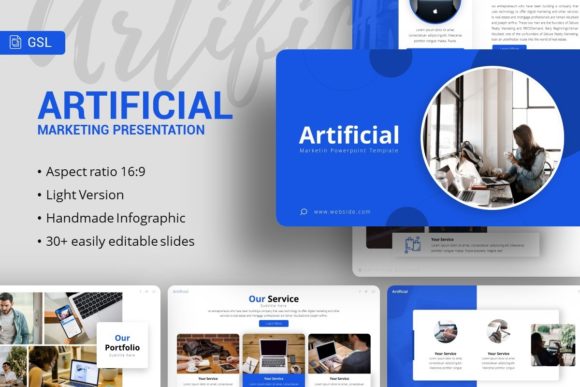
The Google Slides Template - Artificial functions as a comprehensive visual system rather than a simple collection of backgrounds. It is engineered to support narratives surrounding innovation, digital transformation, and creative agency portfolios. While the name suggests a niche focus on AI, the underlying structure supports a broader range of applications including company profiles, pitch decks, startup introductions, and personal portfolios. The design language utilizes pixel-perfect illustrations and handcrafted infographics to translate abstract technological concepts into digestible visual data.
For users evaluating this asset, it is important to recognize that it serves as a middle ground between custom graphic design and stock templates. It provides a polished, agency-level aesthetic without the associated cost or timeline of bespoke design. However, this also means the user inherits a specific stylistic direction. The template is optimized for forward-looking, tech-centric branding. Organizations with traditional, conservative, or non-digital brand identities may find the visual tone misaligned with their corporate standards, regardless of the functional quality of the slides.
Key Features and Technical Specifications
When comparing presentation assets, technical flexibility often dictates long-term value. The Artificial template includes several features that influence workflow efficiency and customization potential:
- Volume of Content: Each template variant includes 35 unique slides. This volume is generally sufficient for comprehensive pitch decks or detailed annual reports without requiring significant external additions.
- Master Slide Architecture: The deck is built on master slides, allowing global changes to fonts, colors, and logos across multiple layouts simultaneously. This reduces formatting time during the editing phase.
- Vector-Based Graphics: Illustrations and icons are vector-based, ensuring they remain crisp when resized for different display formats or printed materials. Rasterized graphics in competing templates often degrade under similar conditions.
- Editable Infographics: Data visualization elements are native to the platform rather than static images. Users can modify charts and graphs directly within the software without needing third-party design tools.
- Drag-and-Drop Placeholders: Image frames are configured as placeholders, streamlining the process of inserting photography or product screenshots.
These specifications suggest a high degree of usability for teams that need to iterate quickly. However, evaluators should verify their own proficiency with master slides and vector editing. While the template is marketed as easy to customize, leveraging its full potential requires intermediate knowledge of presentation software mechanics. Users seeking a strictly plug-and-play solution with zero learning curve may encounter friction when modifying complex infographic layers.
Strategic Fit: When to Choose This Template
The Google Slides Template - Artificial is most effective when the presentation content mirrors the design intent. Several scenarios indicate a strong alignment between user needs and template capabilities:
Technology and Innovation Narratives
If your presentation involves explaining machine learning, automation, SaaS products, or digital marketing strategies, the pre-built iconography and layout structures reduce cognitive load. You spend less time searching for relevant visuals and more time refining the message. The aesthetic signals "modernity" to the audience before a single word is spoken.
Creative Agency and Portfolio Showcases
For creative agencies, the template acts as a portfolio piece in itself. The clean lines and ample whitespace allow client work to take center stage while maintaining a cohesive frame. Startups pitching to investors also benefit from this structure, as the 35-slide count accommodates standard venture capital deck flows, including problem/solution slides, market analysis, and financial projections.
Rapid Deployment Requirements
When timelines are compressed, the included documentation and organized file structure facilitate faster setup. The inclusion of vector icon sets eliminates the need to source external assets, keeping the design process contained within a single ecosystem.
Tradeoffs and Considerations
No template is universally optimal. A balanced evaluation must acknowledge limitations and tradeoffs associated with the Google Slides Template - Artificial.
Visual Specificity vs. Brand Flexibility
The distinct style of the Artificial template is both its greatest asset and its primary constraint. Heavily themed illustrations can sometimes overpower subtle branding efforts. If your organization has strict brand guidelines that conflict with the template’s default color palette or illustration style, the time required to restyle every element may negate the efficiency gains. In such cases, a minimalist, neutral template might offer a better foundation for brand compliance.
Platform Compatibility Nuances
Although labeled as a Google Slides template, the feature list references PowerPoint (.PPTX) files and master slides. Cross-platform compatibility is generally robust, but complex animations or specific font renderings can occasionally shift when moving between ecosystems. Evaluators working in mixed-environment teams (where some stakeholders use Keynote or older PowerPoint versions) should test the file early in the selection process to ensure fidelity is maintained.
Asset Licensing and Preview Limitations
A critical consideration for budget planning is image licensing. As noted in the product details, demo images are for preview purposes only and are not included in the download. Users must budget additional time and potentially funds to source high-quality photography that matches the template's aesthetic. Using low-resolution or stylistically mismatched placeholder images can significantly diminish the professional impact of the final presentation.
Decision-Making Framework for Buyers
To determine if the Google Slides Template - Artificial is the correct investment, consider the following practical criteria:
- Content Alignment: Does your topic relate to technology, creativity, or modern business? If yes, proceed. If no, evaluate neutral alternatives.
- Customization Capacity: Do you have the skills to edit master slides and vector graphics? If you require basic text replacement only, verify that the template’s complexity does not exceed your comfort level.
- Volume Requirement: Do you need approximately 30-40 distinct layouts? If you only need 10 slides, this package may be overly comprehensive. If you need 60+, you will likely need to supplement it.
- File Format Needs: Confirm whether your workflow demands native Google Slides integration or PowerPoint compatibility. Ensure the delivered files support your primary authoring tool.
Ultimately, the Google Slides Template - Artificial represents a specialized tool for communicators in the tech and creative sectors. It offers significant advantages in visual polish and structural completeness for those whose content aligns with its design philosophy. By weighing these benefits against the constraints of brand flexibility and asset sourcing, researchers and buyers can make a confident, evidence-based selection that supports their presentation objectives.