Evaluating Google Slides Template - Radiant for Professional and Culinary Presentations
Selecting the right presentation framework requires balancing aesthetic appeal with functional versatility. For professionals in creative agencies, culinary arts, startups, or personal branding, the visual tone of a slide deck often communicates as much as the spoken content. The Google Slides Template - Radiant has emerged as a notable option for users seeking a design that bridges the gap between vibrant creativity and structured corporate communication. Unlike generic templates that force content into rigid boxes, Radiant is engineered to accommodate diverse narratives, from pitch decks to photography portfolios. Understanding its specific architecture, customization capabilities, and ideal use cases is essential for determining whether it aligns with your current project requirements or if an alternative style would serve you better.
Defining the Radiant Aesthetic and Functional Scope
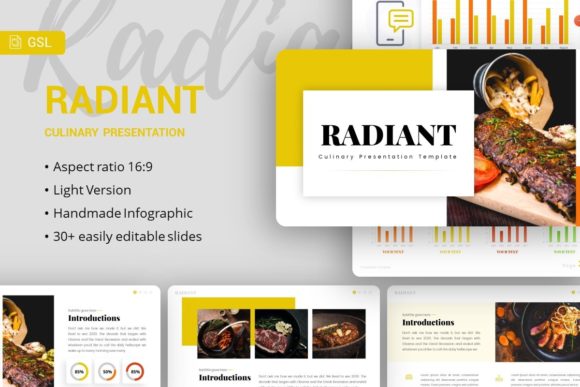
At its core, Google Slides Template - Radiant is designed to be visually engaging without sacrificing readability. The template distinguishes itself through a dual-purpose identity. While it includes specific assets tailored for "Radiant Culinary" presentations—making it highly relevant for chefs, restaurant owners, and food bloggers—the underlying structure is sufficiently neutral to support business profiles, agency portfolios, and startup pitches. This hybrid nature is its primary differentiator in a market saturated with niche-specific or overly corporate designs.
The template provides 35 unique slides per variation, offering a comprehensive library of layouts. This volume is significant because it reduces the need to create custom slides from scratch, which often breaks visual consistency. The inclusion of handcrafted infographics based on master slides ensures that data visualization remains aligned with the overall theme. For users evaluating this resource, it is important to note that all graphics are resizable and editable vectors. This technical specification matters for long-term usability; rasterized images lose quality when scaled, whereas vector elements in Radiant maintain pixel-perfect clarity regardless of screen size or projection format.
Comparing Radiant Against Standard Corporate and Creative Alternatives
When researching presentation resources, users typically encounter two extremes: minimalist corporate templates and highly stylized artistic themes. Radiant occupies a middle ground that warrants careful comparison against these categories.
Versus Minimalist Corporate Templates
Standard corporate templates prioritize safety and uniformity. They excel at quarterly reports and internal memos but often lack the visual energy required for external-facing pitches or creative portfolios. If your primary goal is to present dense financial data to a conservative board, a stark minimalist template might be superior due to its reduced cognitive load. However, for a Creative Agency or Startup Pitch Deck where engagement and brand personality are metrics of success, minimalist options can appear sterile. Radiant offers more dynamic layout variations and color integration, making it a stronger candidate for persuasive storytelling, though it may require slightly more time to adapt for strictly formal compliance reporting.
Versus Niche Culinary or Artistic Themes
Conversely, templates designed exclusively for food or art often sacrifice structural flexibility for thematic decoration. A dedicated restaurant template might feature beautiful plate imagery but lack adequate layouts for team bios, market analysis, or contact information. Radiant’s advantage lies in its foundational Master Slides. Even when utilizing the Culinary variation, the user retains access to robust business layouts. This makes it a safer investment for users who anticipate pivoting their presentation focus over time. If you are a photographer who also needs to pitch sponsorship deals, or a chef seeking investors rather than just displaying a menu, Radiant provides the necessary business infrastructure that pure artistic templates frequently omit.
Assessing Customization and Workflow Efficiency
A template’s value is directly proportional to how easily it can be adapted. The Google Slides Template - Radiant emphasizes editability through several key features that impact workflow efficiency.
- Master Slide Architecture: Changes made to the master slides propagate throughout the deck. This is critical for rebranding. If you need to swap a logo or adjust a primary color across 35 slides, doing so via the master saves hours of manual formatting.
- Drag-and-Drop Picture Placeholders: For portfolio and culinary users, image management is the most time-consuming task. Radiant includes pre-formatted placeholders that automatically crop and mask images. This prevents the common issue of distorted aspect ratios when swapping demo content for original photography.
- Vector Icon Integration: The included vector icon set allows for consistent visual language. Unlike downloading disparate icons from various sources, these are stylistically matched to the template, maintaining professional cohesion.
- Documentation Support: The inclusion of a documentation file reduces the learning curve. For teams with varying levels of design proficiency, having a reference guide ensures that the template is used correctly, preserving the intended aesthetic.
Users should be aware that while the template is fully editable, achieving the exact look of the preview requires attention to detail. The disclaimer that demo images are not included is standard industry practice, but it means the initial setup phase involves sourcing high-quality assets that match the template’s vibrancy. Low-resolution or poorly lit photos will diminish the effectiveness of the Radiant design, particularly in the culinary and portfolio contexts.
Ideal Use Cases and Audience Fit
Determining whether Google Slides Template - Radiant is the correct choice depends heavily on your specific audience and content type. Based on its feature set and design philosophy, it is best suited for the following scenarios:
- Culinary Ventures and Hospitality: Restaurants, catering services, and food influencers benefit from the specialized layouts that highlight texture and color. The template understands that food presentation is visual-first, providing ample negative space and framing for gastronomy.
- Creative Agencies and Portfolios: Designers, photographers, and artists need a backdrop that enhances rather than competes with their work. Radiant’s clean yet colorful aesthetic supports visual-heavy content without overwhelming the viewer.
- Startup Pitch Decks: Early-stage companies often need to convey energy and innovation. The template’s modern typography and infographic capabilities help translate abstract business concepts into tangible visuals, aiding investor comprehension.
- Personal Branding: Professionals building a personal portfolio or freelance business profile will find the balance of personality and professionalism appropriate for client-facing introductions.
Limitations and Decision Factors
No single resource fits every scenario. While Radiant is versatile, there are specific contexts where alternatives may be preferable. Understanding these tradeoffs is part of a thorough evaluation process.
Content Density Constraints: With 35 slides focused on visual impact, some layouts may have limited text capacity. If your presentation requires extensive paragraphs, legal disclaimers, or complex tables, you may find yourself fighting the design. In such cases, a document-centric template or a hybrid report format might be more practical.
Brand Alignment Requirements: Radiant has a distinct personality. If your organization adheres to strict, muted brand guidelines or operates in a highly traditional sector (e.g., heavy industry, government compliance), the template’s inherent vibrancy might require significant modification to meet standards. Evaluate the effort needed to "tone down" the design versus starting with a conservative base.
Software Compatibility: Although marketed as a Google Slides template, the inclusion of a PowerPoint .PPTX file adds cross-platform value. However, users should test animations and transitions in their preferred environment before finalizing. Complex master slide relationships sometimes behave differently when converted between formats. If your team collaborates exclusively in one ecosystem, verify that the handcrafted infographics remain fully editable after conversion.
Making the Final Selection
Choosing Google Slides Template - Radiant should be a strategic decision based on the intersection of your content needs and audience expectations. It represents a strong option for users who require a polished, multi-functional foundation that leans toward visual storytelling. Its strength lies in the ability to serve both creative and commercial purposes without feeling disjointed.
For those comparing options, consider the total cost of ownership beyond the download. A template that looks perfect but requires 20 hours of restructuring is less valuable than one that needs minor tweaks. Radiant’s reliance on master slides and vector elements suggests a lower long-term maintenance burden for users comfortable with basic slide editing. Ultimately, review the 35-slide preview critically: identify at least five layouts that directly solve a current content challenge. If the template provides immediate solutions for your specific mix of text, data, and imagery, it is likely a sound investment for your presentation toolkit.