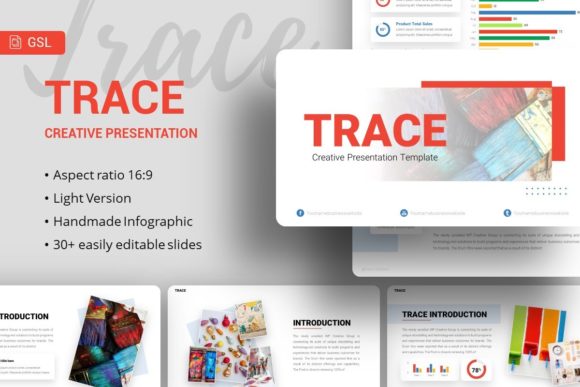
Google Slides Template - Trace: A Comprehensive Framework for Modern Visual Storytelling
In the current digital landscape, the distinction between a standard presentation and a compelling visual narrative often determines the success of a pitch, portfolio, or corporate report. Professionals across various sectors are increasingly moving away from generic, text-heavy slides toward designs that prioritize aesthetic cohesion and functional flexibility. The Google Slides Template - Trace represents this shift, offering a structured yet adaptable environment for creators who need to balance professional polish with creative expression. Understanding the architecture and application of such a template is essential for anyone looking to elevate their communication strategy without investing hundreds of hours in custom graphic design.
Versatile Applications Across Professional Domains
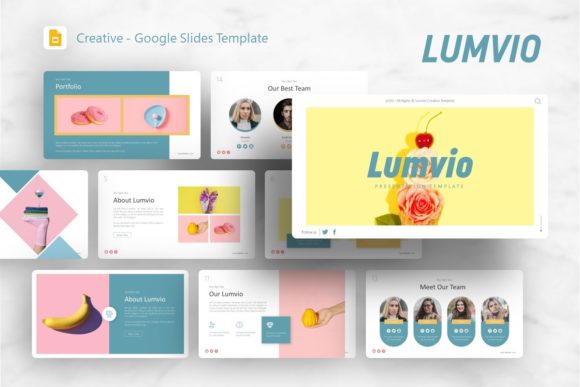
The primary strength of the Trace Creative Google Slides Template lies in its agnostic design philosophy. While many templates are niche-specific, Trace is engineered to serve a broad spectrum of use cases. This versatility is not accidental; it is the result of a modular layout system that separates content structure from visual styling. For creative agencies and marketing firms, the template provides a canvas that reflects innovation and attention to detail. The layouts allow for bold typography and dynamic image placement, which are crucial when presenting branding concepts or campaign results to clients who judge creativity by visual standards.
Conversely, in corporate and business environments, clarity and data visualization take precedence. Trace accommodates this through clean grids and structured hierarchy, making it suitable for company profiles, quarterly reviews, and internal training. Startups utilizing this framework for pitch decks benefit from pre-arranged flows that guide investors through problem-solution narratives logically. Photographers and artists can leverage the picture placeholders to create immersive portfolios where the imagery remains the focal point, unencumbered by distracting decorative elements. Even personal portfolios and academic researchers find value in the template’s ability to organize complex information into digestible, visually engaging segments.
Technical Architecture and Customization Mechanics
Beyond aesthetics, the practical utility of any presentation asset depends on its technical foundation. Trace includes 35 distinct slides for each template variation, providing a comprehensive library of layout options. However, the true efficiency comes from how these slides are constructed. The template is based on Master Slides, a critical feature that allows for global, consistent changes across multiple pages. When a user adjusts a color palette, font family, or logo placement within the master view, those updates propagate automatically. This ensures brand consistency and significantly reduces the time required to adapt the template for different projects or clients.
Customization extends to the graphical elements as well. All graphics within the Trace ecosystem are fully resizable and editable. This vector-based approach means that infographics and illustrations remain crisp at any dimension, avoiding the pixelation issues common with rasterized images. Users can modify chart colors, adjust icon sizes, and rearrange composition elements directly within the editing interface. The inclusion of handcrafted infographics specifically designed for PowerPoint compatibility bridges the gap between static data and visual storytelling. These are not merely decorative; they are functional tools for breaking down statistics, processes, and timelines into formats that audiences can retain more effectively than bullet points.
- Master Slide Integration: Enables global style changes and maintains design integrity throughout the deck.
- Vector Scalability: Ensures all icons and illustrations remain sharp regardless of slide dimensions or projection size.
- Drag-and-Drop Functionality: Picture placeholders streamline the workflow, allowing users to swap preview images with actual content instantly.
- Cross-Platform Compatibility: Includes .PPTX files alongside Google Slides access, ensuring usability across different software ecosystems.
Enhancing Information Retention Through Visual Hierarchy
Effective presentation design is rooted in cognitive psychology. Audiences process visual information faster than text, but only if that visual information is organized hierarchically. The Trace template employs established design principles to guide viewer attention. Pixel-perfect illustrations and intentional whitespace prevent cognitive overload, allowing key messages to stand out. In a startup pitch deck, for example, the template’s layout might dedicate significant space to a single metric or value proposition, using supporting graphics only to reinforce rather than compete with the main point.
For educators and researchers, this hierarchy facilitates better learning outcomes. Complex theories or historical timelines presented through Trace’s infographic slides become narrative journeys rather than lists of facts. The template encourages presenters to distill their content to its essence, fitting ideas into structured visual containers. This constraint is actually a benefit; it forces clarity of thought. When a user selects a specific slide layout from the 35 available options, they are also selecting a rhetorical strategy—whether that be comparison, progression, categorization, or emphasis. Understanding which layout serves which communicative purpose is key to maximizing the template's effectiveness.
Workflow Efficiency and Asset Management
Time management is a universal concern for professionals creating presentations. The Trace template addresses this through streamlined asset inclusion and documentation. The package provides a dedicated Documentation File, which serves as a user manual for navigating the template’s features. This reduces the learning curve, allowing users to locate specific layouts or understand editing restrictions quickly. Furthermore, the inclusion of a Vector Icon set eliminates the need to source external graphics, ensuring that all visual elements share a cohesive stylistic language. Mixing mismatched icons from various sources is a common pitfall in amateur presentation design; Trace mitigates this risk by providing a unified iconography system.
The drag-and-drop picture placeholder system further accelerates production. Instead of manually cropping, masking, and positioning images, users simply drop their media into designated zones. The template handles the aspect ratio and masking automatically. This is particularly valuable for photography portfolios or product showcases where dozens of images may need to be formatted consistently. It is important to note, however, that the high-quality images seen in demo previews are for illustrative purposes only and are not included in the downloadable files. Users must supply their own imagery, but the template ensures that whatever content is inserted will adhere to the established design grid.
Strategic Considerations for Implementation
While the Google Slides Template - Trace offers robust capabilities, successful implementation requires strategic alignment between the tool and the objective. Users should avoid the temptation to use every available slide type simply because it exists. A cohesive presentation often utilizes a subset of layouts repeated rhythmically to create familiarity. Overusing varied infographic styles can make a deck feel disjointed. Selecting five to seven core layouts from the 35-slide library and applying them consistently usually yields better results than cycling through unique designs for every page.
Additionally, while the template is highly customizable, maintaining the underlying grid structure is advisable. The pixel-perfect nature of the illustrations and spacing relies on mathematical alignment. Arbitrary resizing or repositioning of core elements can disrupt the visual balance. If significant structural changes are needed, it is often better to duplicate a master slide and modify the copy rather than altering the foundational geometry of an existing layout. This preserves the professional finish that makes the template valuable in the first place.
Finally, consider the delivery context. Trace is optimized for both screen viewing and projection, but testing is always necessary. Colors that appear vibrant on a high-resolution monitor may wash out under a projector bulb. Because the template uses editable color themes, users should adjust contrast levels based on their specific presentation environment. The flexibility of the .PPTX and Google Slides formats also means that collaboration is seamless; teams can work simultaneously on cloud versions or offline on desktop applications, making Trace a viable solution for distributed workflows. By treating the template as a professional instrument rather than a mere decoration, users can unlock its full potential to communicate ideas with precision, clarity, and impact.